24 May 2025
We detected that you're using an older version of Internet Explorer. please upgrade IE 11 or later
Alternatively, you can install and use these secure and newest browsers: Chrome | Firefox | Safari for MacOS | Edge for Windows

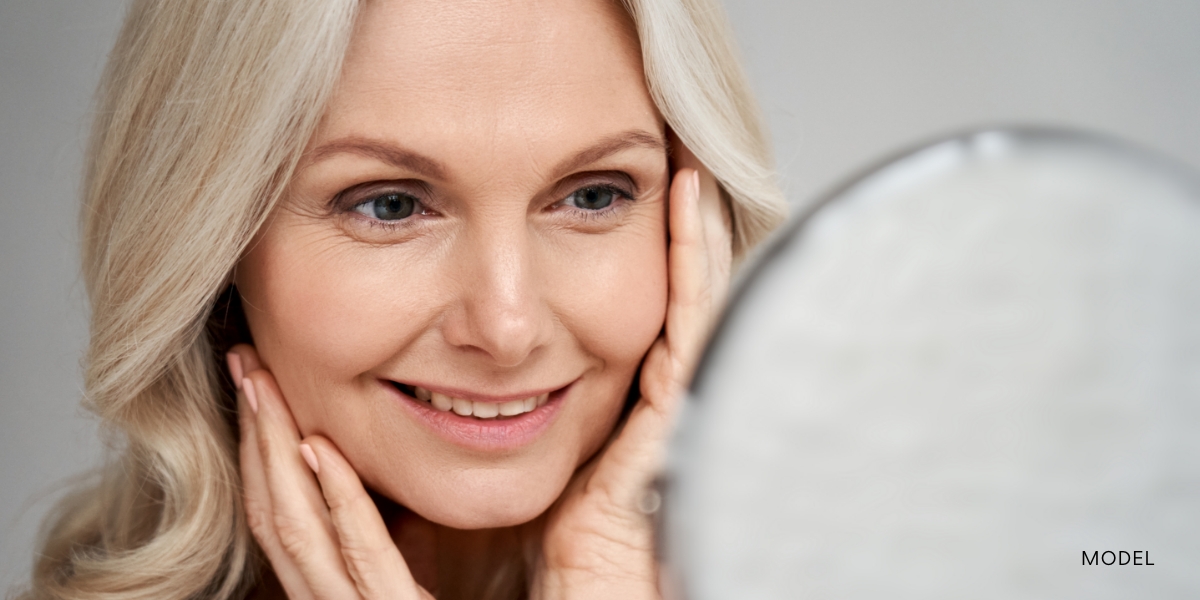
A decade ago, most people seeking surgical facial rejuvenation typically opted for a full facelift. Today, however, many begin their journey with a cheek lift, and data from the American Society of Plastic Surgeons shows a marked uptick in mid-face procedures—proof that this targeted approach is gaining momentum. Below, Dr. George Sanders explains how a cheek lift works, who benefits from it, and why an increasing number of patients choose this focused option first.
A cheek lift re-suspends the fat pads, muscle layer, and skin of the mid-face, restoring youthful volume under the eyes and softening nasolabial folds. Unlike a traditional facelift, it does not extend under the jaw or into the neck, so incisions stay hidden at the hairline and inside the front of the ear. Think of it as “just the facelift portion that treats the cheeks,” leaving the neck untouched unless it, too, needs tightening.
Because mid-face descent often appears before jowling or heavy neck laxity, cheek lift patients tend to be younger than classic facelift patients, typically in their late 30s to mid-40s, with good skin elasticity. You may be ready for a cheek lift if you notice:
Mid-face elevation alone refreshes the center of the face, yet subtle tweaks elsewhere may enhance harmony:
Expect some swelling and bruising during the first week; most of it subsides by day 10, and light makeup can often cover any residual discoloration. Incisions sit inside the hairline and typically fade to faint, pencil-thin lines within months. Results may last seven to 10 years, depending on genetics and skincare habits. Because less tissue is shifted than in a deep-plane facelift, the refreshed look ages more gradually and rarely appears “over-pulled.”
Wondering whether you are “cheek lift ready” or still in prime filler territory? Dr. Sanders will measure skin elasticity, fat-pad position, and eyelid-cheek junction depth, then recommend:
Either way, you gain a naturally refreshed profile that aligns with your current stage of life. Browse our facial rejuvenation options online, or schedule a consultation with Dr. Sanders to discover whether a cheek lift—or another tailored approach—best aligns with your goals.



Board-certified plastic surgeon, Dr. George Sanders has years of experience helping men and women look and feel their best through aesthetic procedures including rhinoplasty, tummy tucks, breast augmentation, facelifts, and more. Dr. Sanders and his team are proud to serve clients throughout the Los Angeles and San Fernando Valley areas.